
Mosaic tile installation in Manchester
Mosaic fitting for kitchen splashbacks, shower rooms, decorative floors and business interiors in Manchester. From an apartment bathroom to a kitchen in a terraced house, the finish needs to suit the construction underneath it as well as the room around it. Fitting-only, supply-and-fit and mosaic repairs are available.
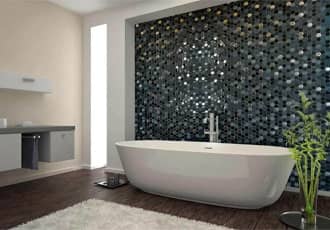
Mosaic tile installation in Manchester for homes and businesses
Preparation, fixing and finishing
The work includes preparing the wall or floor, arranging the pattern, fixing the small pieces and completing the grout, edges and junctions. Existing finishes can be removed, uneven areas repaired and suitable boards or waterproofing installed where needed. A decorative panel can also be fitted alongside larger kitchen or bathroom tiles rather than becoming a separate-looking addition.
Ancoats conversions and the wall behind the mosaic
Ancoats combines its industrial building heritage with later residential redevelopment. In a converted property, exposed masonry elsewhere in a room does not reveal what sits behind a bathroom lining. The plaster, boards or retained tiles at the fixing surface need a sound bond and suitable preparation, even when the building’s outer structure is masonry.
A shower niche or narrow feature panel needs that lining to be secure and flat. Where a newer tiled section meets an older retained finish, the depth and perimeter detail matter: an attractive mosaic should not end in a rough strip of exposed adhesive or an awkward step.
Apartment bathrooms with a complete wet-area finish
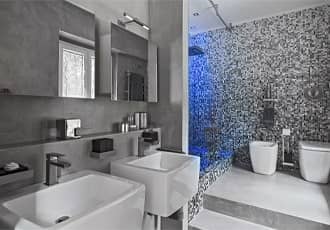
Mosaic shower floors and the drainage build-up
Small tiles can follow a properly formed shower floor, but the falls have to exist in the base before the mosaics are fitted. The waterproofing needs a continuous connection at corners, the drain and other junctions. A floor-rated mosaic with appropriate wet-use suitability is essential; a high number of grout lines is not a slip rating.
Floor levels and existing acoustic layers
In an apartment, a replacement finish may have to work with an existing acoustic floor system, door clearance and the level at the bathroom entrance. Any required acoustic layer belongs in a compatible build-up rather than being removed simply to make space for tiles. Existing boards, screed and floor coverings determine the preparation and the finished height.
Glass sheets, stone mosaics and ceramic pieces also need a backing and fixing system suited to the wet location. Grout finishes the joints between the pieces; it does not take over the job of the waterproof layer underneath.
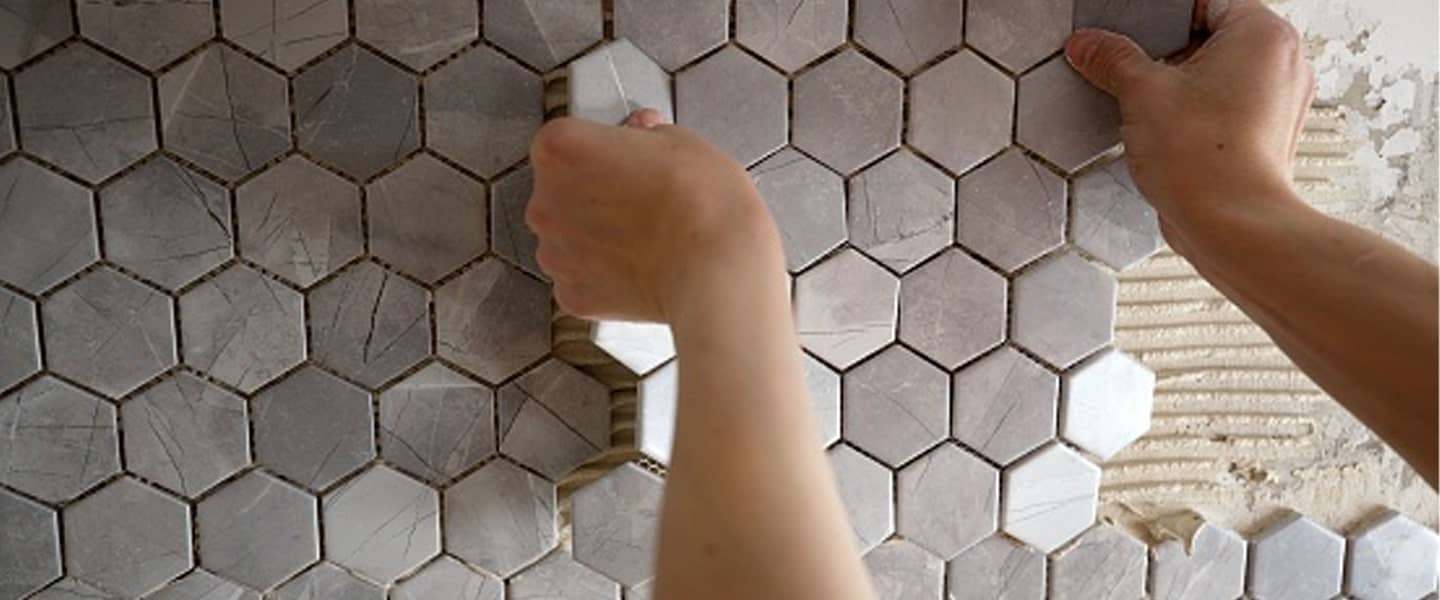
Kitchen mosaic fitting in terraced homes
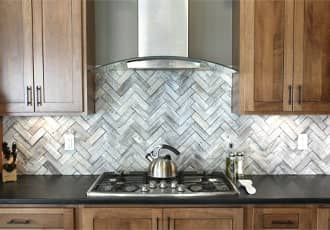
Levenshulme splashbacks around existing kitchen units
Levenshulme is known for its terraced housing. In an existing kitchen, a new mosaic splashback may need to work between retained cabinets, a window reveal and several socket positions. The complete run governs the pattern, so a decorative repeat can finish sensibly at both ends rather than look balanced on only one wall.
Older tiles coming off can leave plaster repairs and uneven adhesive behind them. Those faults need attention before the sheets are fixed. Worktop junctions and inside corners then need a suitable flexible finish, while a panel behind a hob must respect the appliance clearances and the chosen material’s heat suitability.
Glass highlights or a softer stone pattern
Glass can catch under-cabinet lighting, making an inconsistent adhesive bed or uneven sheet alignment more visible. Marble or other stone brings natural variation and may need stain protection and sealing. Ceramic and porcelain offer different surface textures and edge finishes. The fixing and cleaning method follows the selected material rather than one standard treatment for all mosaics.
A repair or refresh without an unnecessary full replacement
The 2021 Census recorded 32.3% of Manchester households as privately rented. For a rental kitchen or bathroom, a worn panel does not always justify replacing every surrounding finish. A local mosaic repair, renewed grout or replacement silicone can be appropriate where the rest of the installation remains sound.
Missing pieces still need a suitable match, and a patch cannot disguise a wider loss of bond. Persistent cracking, damp behind the finish or movement in the base may require a more substantial repair. Where the base has failed, the repair extends below the mosaic rather than stopping at the grout.
Matching the surface and the joints together
The original mosaic may no longer be available, and fresh grout can look different from older joints. A replacement panel can sometimes give a more consistent result than scattered near-matches. Its boundary needs a deliberate finish against the retained tiles or painted wall.
Mosaic details for bars, shops and guest bathrooms
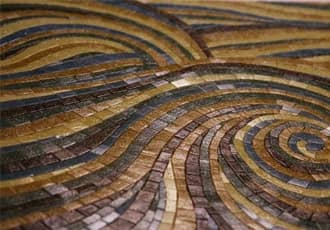
Commercial mosaic work can include a bar front, reception panel, decorative floor or hotel shower room. A curved counter needs a properly shaped background, while a busy floor needs materials and joints suited to its traffic and cleaning. Bespoke patterns and logos are available where the design calls for individual pieces rather than a repeated sheet.
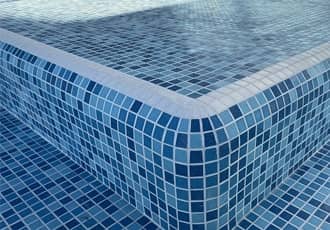
Pool, spa and steam-room mosaics are also available, with an installation specification suited to immersion or heated wet conditions. These are different environments from an ordinary kitchen splashback. The tile backing, waterproofing, adhesive and grout all need to belong to the same suitable system.
Grout, edges and adjoining finishes
A matching grout can let the colour of the mosaic take the lead; a contrasting shade draws attention to every piece and joint. Glass and polished surfaces need compatible grout and cleaning methods that avoid scratching. At changes of plane and movement locations, the finish needs flexibility instead of rigid grout across the junction.
Preparation and finishing can include levelling, backer boards, suitable stone sealing and general kitchen or bathroom tiling around the mosaic. Supply-and-fit brings the selected tiles and fitting together, while customer-supplied mosaics can be installed when they are suitable for the intended use. A tidy old covering can conceal weak adhesion or an uneven base, so the new finish still depends on suitable preparation.
Mosaic work for your home or premises
Mosaic installation, preparation and repairs for kitchens, bathrooms and commercial interiors, with fitting-only and supply-and-fit options.
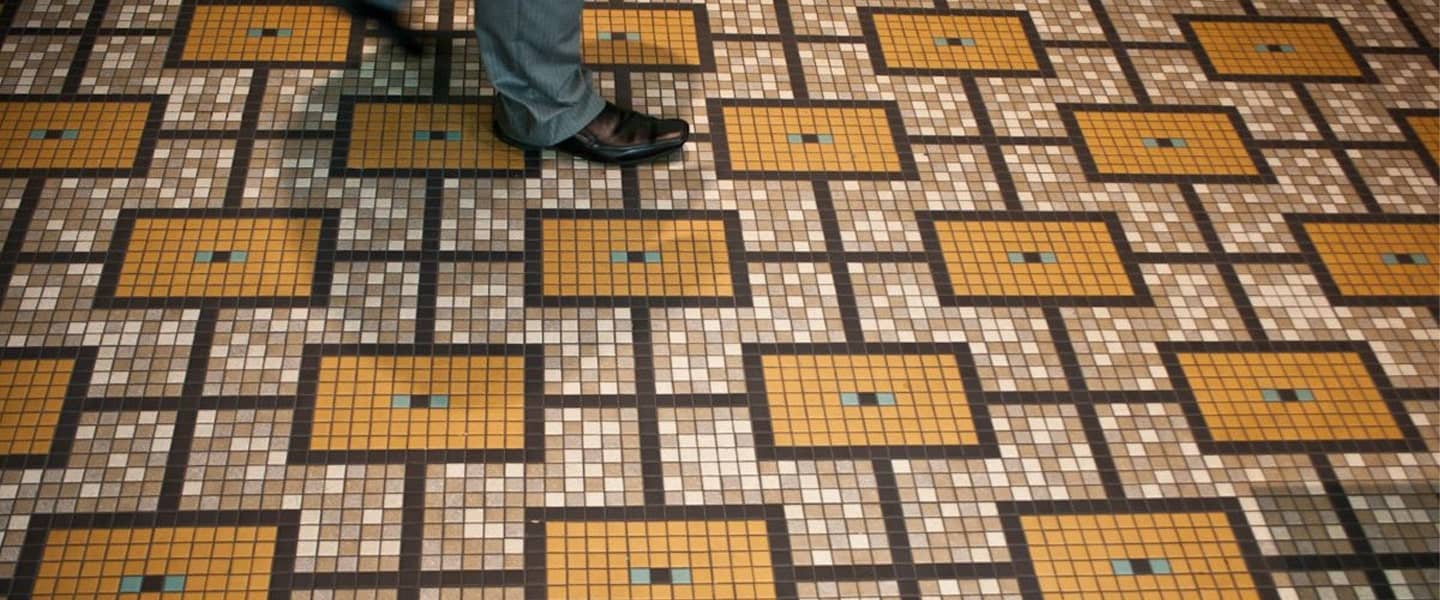
Mosaic finishes for kitchens, bathrooms and floors
Mosaic fitting for kitchens, bathrooms, floors and decorative surfaces.
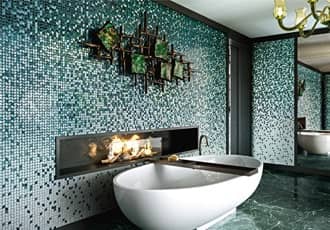
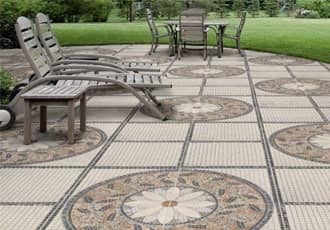
Questions about mosaic sheets and wet-area finishes
Yes. The work can follow retained worktops and cabinets, with the pattern and cuts balanced around sockets, reveals and visible ends. Any weak or uneven wall finish needs suitable preparation first.
No. A bathroom or kitchen can have later linings within an older building. The actual installation surface determines its preparation and fixing method, even where original brickwork is visible elsewhere.
Potentially, with a suitable floor build-up. Levels, drainage, waterproofing, any required acoustic layer and the mosaic’s wet-floor suitability all matter. Small tiles do not remove those construction requirements.
Yes, where the remaining finish and background are sound. The panel depth, edge treatment and junctions need to work with the surrounding tiles, including any difference in tile thickness.
No. Water can escape through a failed waterproofing system or a faulty junction below the tiles. Regrouting deals with the tile joints and is not a universal repair for a leaking shower.
Yes. Individual-piece replacement, panel repairs, regrouting and silicone renewal are available. The condition of the installation determines whether a limited repair is suitable or a wider section needs attention.
Yes. Curved work needs a suitable supporting shape, compatible mosaics and careful spacing around the radius. The finished material and grout also need to suit the counter’s use and cleaning.
Yes. Customer-owned mosaics and general kitchen or bathroom tiling can form one installation. Differences in thickness, pattern and joint width need a planned meeting point rather than an abrupt unfinished edge.
Yes. Supply-and-fit and fitting-only are both available. The chosen finish still needs to be suitable for its wall, floor, shower or specialist environment, with compatible fixing and finishing materials.