
Bathroom mosaic tiling and wet-room installation
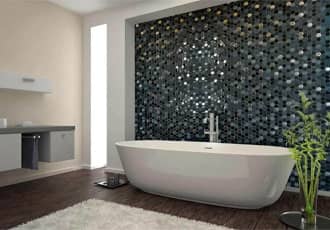
A mosaic shower wall, a tiled bathroom floor and a recessed shelf meet water in different ways. Bathroom mosaic tiling brings those surfaces together with suitable preparation beneath them. Installation is available for shower enclosures, wet-room floors and complete bathroom wall and floor finishes, using your mosaics or supply-and-fit.
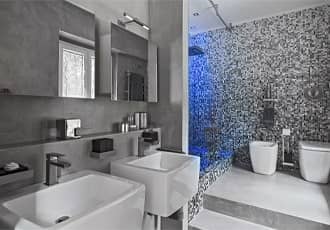
Bathroom mosaic tiling for showers, floors and complete rooms
Shower walls, bath surrounds and basin features
Full-height shower walls, a band above a bath and a basin panel each need a deliberate stopping point. Setting out takes account of taps, screens, bath edges and adjoining tiles so the mosaic does not finish with a narrow sliver at the most visible junction. Pipe and fixing positions need to be coordinated with the finished tile thickness.
Graded floors around the drain
A wet-room floor must drain as well as look level from the doorway. The former or screed establishes the falls; the mosaic follows them without creating pockets around sheet edges. The individual tile size, drain flange and chosen waterproofing system have to work together. Extra grout joints alone do not establish safe barefoot performance.
Tiling that joins the rest of the room
General bathroom tiling can accompany the mosaic. A feature strip beside thicker porcelain, a shower threshold and the floor outside the enclosure all need compatible build-ups. The work includes the agreed preparation, fixing, grout, edge treatment and flexible junctions; plumbing and electrical alterations are not ordinary tile-fitting inclusions.
The waterproof layer and its junctions
Tanking behind the tiled finish
Tiles shed water at the face, but grout is not a substitute for a continuous waterproofing system. Required tanking is integrated with corners, board joints and penetrations before the decorative finish goes on. A water-resistant board and a complete watertight assembly are not the same thing; the board system determines its sealing requirements.
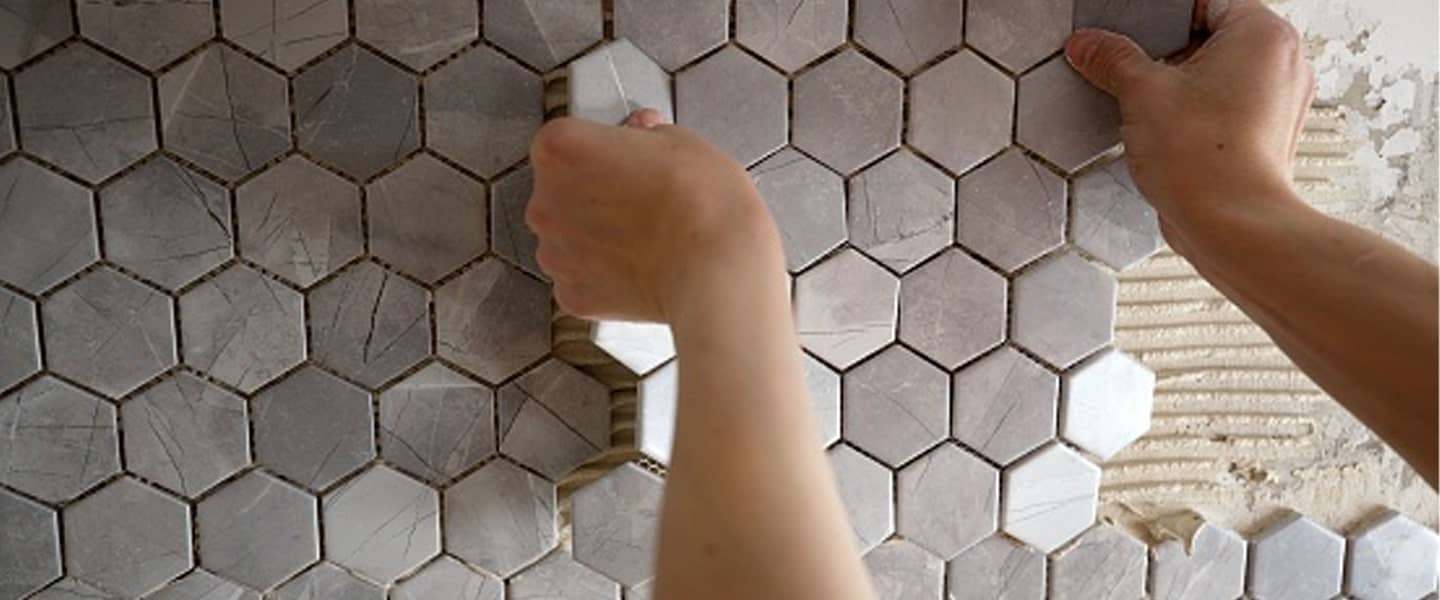
Drains, shower screens and recessed shelves
The drain connection must belong to the waterproofing arrangement rather than rely on an exposed bead of sealant. Screen fixings and pipe openings need appropriate detailing. For mosaic-lined niches and recessed panels, the base of the recess must shed water back into the shower, with the waterproof layer continuous behind the returns.
Sound walls and supported floors
Plaster, backer boards and earlier tiles
Weak plaster, poorly fixed boards and old adhesive ridges need correction before small-format pieces are bedded. The background has to support the total weight of the finish, not just the bare mosaic sheet. Tiling over an earlier finish is only suitable where its bond, condition, thickness and compatibility allow it.
Timber movement and heating below the tiles
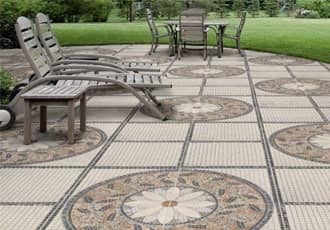
A suspended floor may need a different build-up from a concrete slab. Movement, board fixing and the finished doorway height matter before an overlay is chosen. Some uncoupling products have minimum tile dimensions and cannot simply be assumed suitable for tiny mosaics. Decorative tiled floors beyond the shower need the same attention to support and transitions.
Choosing a finish for contact with water

Glass, porcelain and natural-stone surfaces
Glass on a wall can reveal adhesive shadows that would be hidden by an opaque tile. Porcelain and ceramic still need the correct wall or floor approval. Marble and other stones can react to moisture, staining and unsuitable cleaners; protective treatment must match the particular stone without being mistaken for waterproofing.
Barefoot use and the pattern of joints
A heavily textured mosaic may feel different underfoot from a smooth sample. Floor suitability and wet-barefoot performance need evidence for the actual product, with cleaning and the expected users in mind. Consistent joints help the layout read evenly, but they do not make every polished or glass mosaic a suitable shower-floor finish.
Grout, corners and careful completion
Joint colour across a small tiled room
With mosaic, the amount of visible grout can noticeably lighten or darken the whole surface. A trial of the proposed grout with the actual tile can reveal staining, scratching or a stronger contrast than expected. Fine joints need a product that can fill them properly without damaging delicate faces.
Flexible changes of plane
Internal corners, perimeters and junctions with a bath or tray need the joint treatment required by the installation. Rigid grout should not be used to lock together surfaces expected to move differently. Adhesive, waterproofing, grout and sealant each have curing requirements before the shower returns to use.
Replacing a tired finish or retaining sound mosaic
A worn seal or small damaged patch does not always require a full bathroom retile. Mosaic grout repairs and silicone renewal can retain sound surrounding work when the background and waterproofing remain serviceable. Loose sheets, recurring cracks or damp behind the lining may instead require removal and a wider repair.
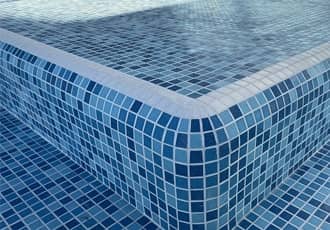
Bathroom work can be coordinated with other mosaic installation services in the home, while retaining a different specification for each room. A domestic shower does not call for the same products as a permanently submerged pool, and a dry decorative wall does not have the exposure of a shower enclosure.
Bathroom mosaic fitting enquiries
Shower mosaics, wet-room floors and coordinated bathroom wall and floor tiling.
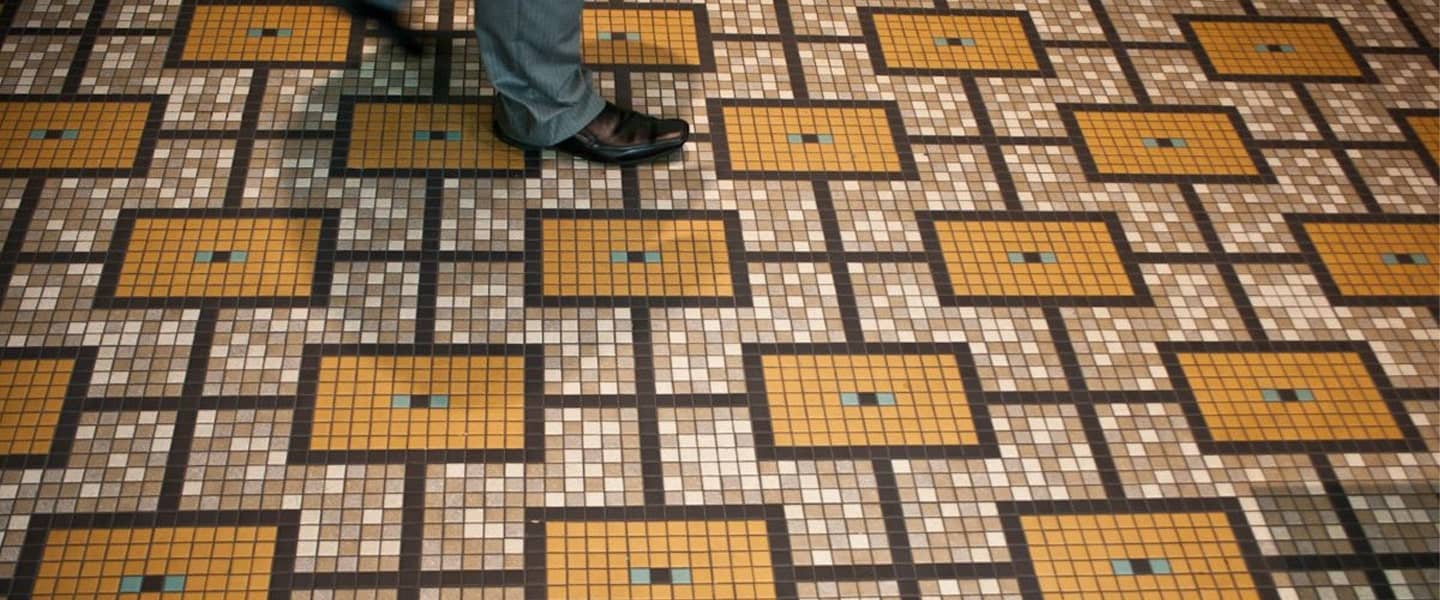
Mosaic finishes across the home and beyond
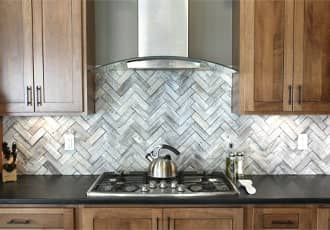
Fitting for kitchen surfaces, wet rooms, patterned floors and decorative details.
Bathroom mosaic tiling and wet-room installation — questions
Yes. Walls and the floor can be finished in suitable mosaics, with each surface prepared for its use. Floor approval, drainage, waterproofing and details around outlets need to be resolved as part of the installation.
No. A grout product cannot replace the required waterproof assembly behind the tiles. Corners, board joints, drain connections and pipe penetrations need compatible waterproof detailing of their own.
Yes, where the floor construction, drainage and waterproofing can support that arrangement. Small tiles can follow graded surfaces, but the former, drain and tile format must be compatible and the finished floor must drain correctly.
No. The mosaic backing and adhesive holding the pieces must tolerate the intended wet conditions. The floor system may also restrict minimum tile size or the type of tile that can be used.
Only if the product is suitable for both. A wall mosaic may lack the required floor performance, even when the appearance matches. A coordinated floor-rated alternative may be more appropriate.
Often, provided the bath is stable and the surrounding construction is suitable. Access, existing seals, waterproofing and the junction with the bath determine whether local fitting or more extensive preparation is needed.
Possibly. Its condition, floor build-up and the compatibility of the tiling system must be established. Heating operation during installation and its return to use follow the relevant product requirements rather than a universal timetable.
Some stones and finishes are suitable, but suitability is product-specific. Moisture sensitivity, sealing, cleaning and barefoot use need to be checked. Sealing the stone does not create the shower waterproofing.
After the waterproofing, adhesive, grout and sealant have reached their required cure under the actual conditions. The installation products determine that period; a fixed immediate return to use is not promised.