
Swimming pool mosaic tiling, spas and steam rooms
Waterlines, curved seating and steam-room walls need mosaics specified for their actual exposure. Swimming pool mosaic tiling is available alongside spa and steam-room fitting, for new finishes and suitable refurbishment work. The tile, backing, waterproofing and joint materials must operate as a compatible assembly in water, heat and the intended cleaning environment.
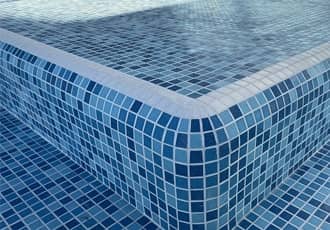
Swimming pool mosaic tiling for waterlines, steps and pool interiors
Pool interiors, waterlines and entry steps
A pool finish can include the tank surfaces, a waterline band, steps and built-in seating. The visible waterline needs a consistent datum around the shell, while the steps need clear, comfortable edges. Tile suitability for immersion and wet use takes priority over using the same decorative sheet on every surface.
Spa benches and curved mosaic surfaces
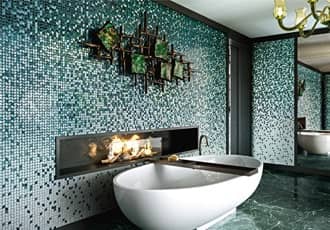
Small pieces can follow shaped seating and tighter radii, but the form beneath them determines the finished profile. Sheet direction, cut pieces and joint spacing need adjustment around curves. Jet housings, lights and outlets create interruptions that need planned waterproof interfaces as well as neat visible cuts.
Steam rooms and warm wet interiors
A steam room exposes its lining to hot vapour, not just occasional shower water. The construction, vapour control and finishing system must be designed for that use. Mosaic fitting can cover suitable walls, ceilings and formed seating, coordinated with the room design and equipment positions rather than treated as ordinary bathroom tiling.
A water-retaining structure before a decorative lining
Pool shells, renders and refurbishment backgrounds
The structure needs to be suitable and watertight under its specified design before the mosaic finish is relied upon. Weak render, old adhesive and damaged areas need appropriate preparation. A shell crack or an active structural defect cannot be repaired merely by laying new sheets across it.
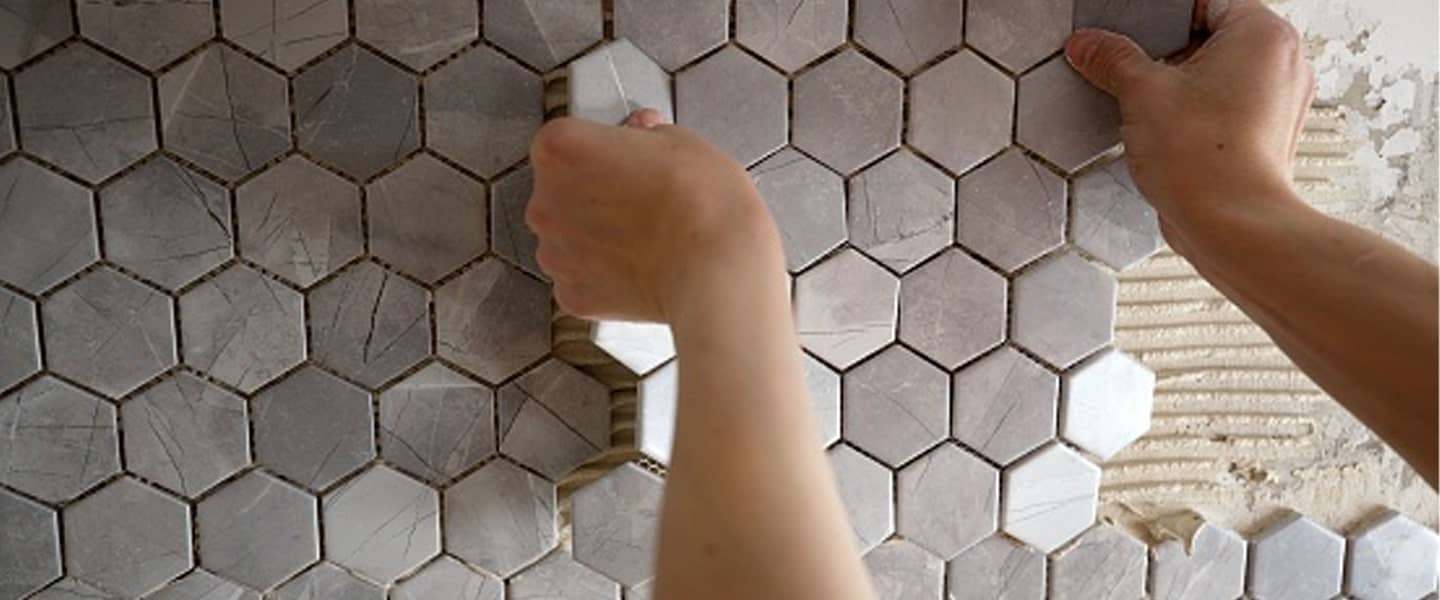
Waterproof connections around pool fittings
Where the design requires a waterproofing layer, it must suit immersion and connect properly at drains, inlets, lighting and wall-to-floor junctions. The tiling and the water-retaining construction have different roles. A glass mosaic surface and chemically resistant grout do not by themselves make the shell watertight.
Tile backing, adhesive and the water chemistry
Mosaic products approved for immersion
The complete sheet matters, including the mesh, glue and any decorative backing. A material sold for a shower wall may not tolerate permanent immersion. Glass coatings, natural stone and metallic components can have restrictions of their own, so suitability must be established for the actual product and environment.
A supported bed beneath each piece
Solid bedding supports the tesserae and limits voids where water can collect. Translucent glass also needs a consistent background so trowel marks or uneven adhesive do not dominate the appearance. Concrete, fibreglass and other shell types require different bonding arrangements; a product suitable for one is not assumed suitable for all.
Grout chosen around treatment and cleaning
Water treatment, temperature, chemical exposure and moving water influence joint-material selection. Reaction-resin grout can be appropriate for demanding areas, while suitable cementitious products are permitted in some specified pool conditions. There is no universal rule that one grout family suits every pool, or that epoxy removes the need for waterproofing.
Seating, drainage and changes of plane
Spa curves and steam-room recesses
The bedding and tessera layout need to preserve the intended seat profile without sharp steps at sheet boundaries. Recesses and shelves should not create standing-water pockets. In steam rooms, ceiling and seating forms must follow the room system design so condensation and cleaning water are managed appropriately.
Movement joints and adjacent wet floors
Structural and designed movement joints must remain functional through the tiled finish. Perimeters and fittings need the specified flexible details rather than being rigidly grouted shut. On surrounding floors, wet-barefoot use and drainage are separate checks from immersion suitability; shower-area mosaic fitting can form part of the adjoining changing facilities.
Refurbishment without disguising an underlying fault
Local mosaic replacement and joint repairs may suit an otherwise sound pool or spa finish. Wider loss of bond, repeated grout failure or damaged waterproofing calls for a broader remedy. Existing water chemistry and cleaning practices also need to be compatible with the repaired system; replacing joints alone does not correct an unsuitable operating environment.
A decorative panel above the water can use a different specification from the submerged tank. Mosaic panels and curved wall details can be coordinated visually while retaining the correct materials for each exposure. Our wider mosaic tiling services cover the finish and associated preparation, not automatic supply of the pool plant or steam generator.
Curing before filling, heating and use
The waterproofing, adhesive, grout and sealant each need their required cure before immersion or heating. That period varies with the products, background and conditions; a small repair does not automatically shorten it. The pool or steam-room return to service must follow the compatible system requirements rather than a general domestic tiling timetable.
Completion includes the agreed edges, fittings, movement details and removal of installation residue. Pool filling, water treatment and steam-equipment commissioning must be coordinated with those requirements. The fitting work does not imply responsibility for structural pool engineering or the operation of specialist equipment.
Pool and steam-room mosaic enquiries
Mosaic pool finishes, spa seating and steam-room tiling with environment-specific preparation and joint details.
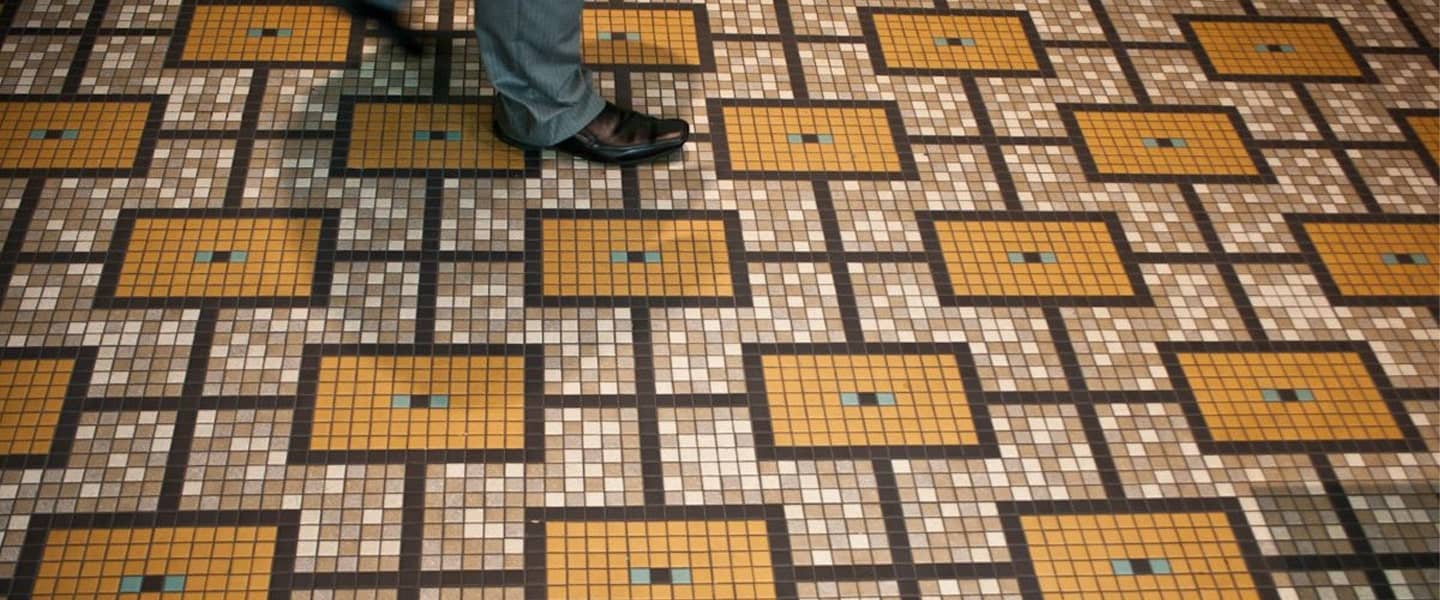
Mosaic finishes across the home and beyond
Fitting for kitchen surfaces, wet rooms, patterned floors and decorative details.
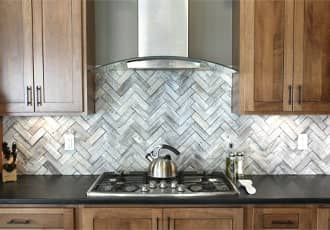
Swimming pool mosaic tiling — questions
Only if the complete mosaic product is approved for the intended immersion conditions. Its backing, glue and decorative coating matter as much as the visible tile. Shower suitability alone is not sufficient evidence.
No. The water-retaining structure and any specified waterproofing must perform independently of the decorative finish. Tiles, grout and surface sealant cannot replace a suitable watertight shell assembly.
Possibly, where the existing tank finish and background remain sound and the waterproof connection can be maintained. Matching the tile, joint width and level of the band needs particular attention.
Product selection depends on the pool conditions and specification. Reaction-resin grout is useful in demanding chemical or moving-water exposure, while certain cementitious products suit specified balanced-water conditions. Compatibility must be established for the actual installation.
Yes, with suitable pieces and a correctly formed background. Sheet direction, individual cuts and joint spacing need to follow the radius so the seating profile remains comfortable and the pattern does not break into obvious sheet edges.
It needs a construction and lining system designed for heat and vapour. A product suitable for an intermittently wet shower is not automatically suitable for continuous steam exposure or a steam-room ceiling.
Some systems allow it, but bonding to fibreglass needs a specification suited to that shell and finish. A normal cement-based installation method should not be assumed appropriate without confirmation of compatibility.
No. Mosaic fitting does not automatically include plant, filtration, water-treatment equipment, steam generators or their connections. Tiling details can be coordinated with the relevant equipment and room design.
Only after the relevant waterproofing, adhesive, grout and sealant have met their cure requirements. The system and site conditions determine the interval, with filling, heating and water treatment coordinated accordingly.