
Mosaic splashback installation
A splashback is a small surface that stays in view every day. The pattern needs to sit comfortably above the worktop, finish neatly around sockets and reach each exposed edge without untidy cuts. Kitchen and utility-room mosaic fitting is available with your own tiles or as supply-and-fit. This work is also available for kitchens in Manchester.
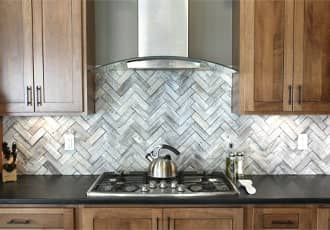
Mosaic splashback installation behind hobs, sinks and worktops
Preparation, fixing and finishing
The installation covers the wall preparation, setting out, mosaic fixing, grout and finished junctions needed for the chosen splashback. It can form a continuous band beneath wall units, a full-height section behind a hob, or a decorative panel surrounded by larger tiles. Existing tile removal and repairs to the wall are available as part of the work.
A balanced mosaic layout above the worktop
A pattern that looks centred on a loose sheet can finish awkwardly between fixed kitchen units. The setting out has to take account of the full run, changes in worktop height, the hob position and the visible ends. Where a border or repeating motif is involved, the cut at one end affects how the other end will look.
Socket cut-outs, window reveals and exposed ends
Sockets and corners need individual pieces cut or adjusted, not simply a square hole through a sheet. The tile edges should sit neatly around the fittings without obstructing them. Window reveals and open ends may need trims, a suitable finished tile edge or a return of the mosaic. Electrical alterations and the safe removal or refitting of electrical fittings belong to a suitably qualified electrician, not ordinary tile cutting.
A wall that will hold the finish
Replacing an old tiled splashback
Removing old tiles can reveal loose plaster, adhesive ridges or damage around earlier socket positions. Those areas need a sound repair before the small new pieces go on. Mosaic sheets tend to follow bumps and hollows, so a wall that looked acceptable behind large tiles may need further flattening.
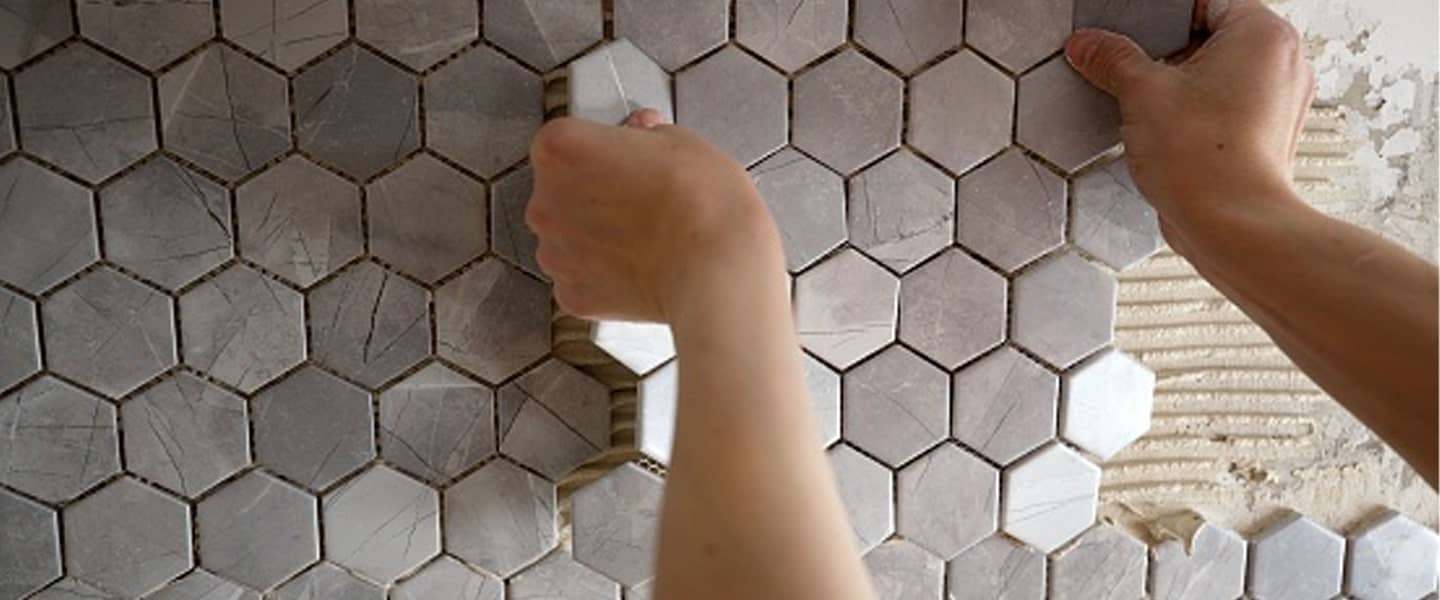
Tiling over a sound existing surface
An existing tiled wall can sometimes remain if it is firmly bonded and suitable for the new fixing system. The extra thickness still changes the relationship with sockets, upstands, trims and cabinets. Loose tiles, an unstable coating or a wall affected by unresolved moisture are not a dependable base to cover over.
Plaster, tile-backer boards and other linings each have their own fixing and preparation requirements. Priming and repair products need to suit that background; the adhesive is not a general-purpose levelling compound.
The material changes the visible result
Glass mosaic under kitchen lighting
Translucent glass can reveal what is behind it, including the adhesive colour and an uneven bed. Reflections from under-unit lights can also emphasise changes in alignment. The fixing method needs to give the chosen glass a consistent background, and the grout and cleaning method must not scratch its face.
Marble and stone beside sinks and hobs
Natural stone brings variation rather than an identical repeated colour. Blending the sheets and individual pieces helps that variation work across the run. Some stone needs stain protection before grouting and suitable sealing afterwards. Its finished surface also needs cleaning products that are compatible with the material.
Ceramic, porcelain and mixed-material sheets
Glazed ceramic, porcelain and mixed mosaics can differ in thickness, edge profile and fixing needs. A sheet containing metal or decorative inserts may have restrictions that an ordinary ceramic does not. The appearance of the complete sheet matters, but so does the specification of every component.
Heat, splashes and the worktop junction
Behind a hob, the appliance clearances and the suitability of the chosen mosaic take priority over a decorative layout. Tiling is not a way to reduce a required clearance or make a heat-sensitive product suitable for a hot location.
A kitchen sink splashback normally has different water exposure from a mosaic-lined shower. The background and expected use determine whether additional water protection is needed. Waterproofing is available where required, but grout and a bead of sealant should not be treated as a complete remedy for a wet or damaged wall.
At the worktop, internal corners and changes of material, the finish needs the appropriate flexible joint. Filling every junction with rigid grout can leave cracking where the kitchen and wall move differently.
Grout that belongs with the mosaic
Because there are so many joints, grout colour can change the character of the whole splashback. A pale matching shade can make a small kitchen feel less visually busy, while a stronger contrast makes the shape of each piece clearer. The joint width and the tile finish also determine the suitable product.
Cement-based and epoxy products serve different requirements. Epoxy can be useful where enhanced stain or chemical resistance is needed, but it is not automatically necessary behind every domestic sink. Compatibility with glass, stone and decorative finishes matters more than choosing a product by name alone.
The finished work includes cleaning off installation residue and completing the edges and sealant details. Grout, adhesive and sealant need to cure in line with the product requirements before the splashback is used or cleaned.
A new splashback or a smaller repair
A whole replacement is not always needed. Individual damaged pieces, a failed patch of grout or worn silicone may be repairable while the rest remains in place. The repair depends on the condition of the background and the availability of a close material match. Regrouting cannot secure loose sheets or repair a failing wall behind them.
For a new kitchen finish, mosaic work can sit alongside general wall and floor tiling. Differences in thickness between a mosaic panel and larger tiles need to be resolved in the background and edge details, not left as an accidental ledge.
Why similar-sized splashbacks can need different work
A plain rectangle on a prepared wall is a different installation from several short runs around windows and sockets. Removal, wall repairs, the number of cut pieces, a continuous border and the chosen edge finish all change the labour involved. Supplying new mosaics adds material selection and supply to the fitting work; either option still needs suitable preparation.
Enquiries about kitchen mosaic work
New mosaic splashbacks, replacement panels and local repairs, with fitting-only or supply-and-fit.

Mosaic finishes for kitchens, bathrooms and floors
Mosaic fitting for kitchens, bathrooms, floors and decorative surfaces.



Kitchen mosaic splashback questions
Yes. A continuous run can fill that space, with the pattern set out around the cabinets and visible ends. Variations in worktop or cabinet levels may affect the cuts needed.
Yes. The layout needs to continue neatly through the change of direction, while the corner itself retains the appropriate movement detail. Grout lines do not have to end in an oversized joint.
Not always. Sound, well-bonded tiles may be suitable to retain, depending on the new system and finished thickness. Loose tiles or an unsuitable background need different preparation rather than another covering.
No. The mosaic, any backing or decorative coating, and the appliance clearances must suit the heat exposure. A product described as a kitchen tile is not automatically suitable for every hob position.
Socket relocation and electrical alterations are separate electrical work for a suitably qualified electrician. The tiling covers cuts and finished edges around the socket positions; it does not include electrical alterations.
No. The right grout depends on the tile, joint width and expected exposure to stains or cleaning products. A compatible cement-based grout can suit many domestic installations; epoxy is an option for particular requirements.
It depends on the kitchen sequence and the intended junction. The final worktop level and thickness affect the bottom edge and sealant joint, so those relationships need to be settled within the installation layout.
Often. A local replacement may be possible where the wall and surrounding tiles remain secure. An exact colour or finish match cannot be assumed, particularly with discontinued mosaics or aged grout.
Yes. Supply-and-fit is available, alongside installation of customer-owned tiles. Material suitability, backing, trims and grout need to work as one compatible splashback finish in either case.