
Mosaic feature walls, panels and niches
A feature can be a full wall, a narrow panel beside a basin or a recessed shelf within a shower. Mosaic feature walls need the pattern and its boundaries to work as one composition. Fitting is available for decorative panels, niches, borders and suitable curved surfaces, with bespoke patterns and coordinated surrounding tiling.
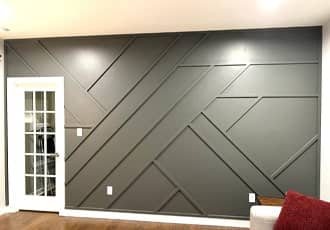
Mosaic feature walls for living spaces and wet-area details
Full walls and framed decorative panels
The panel size should work with the repeat, the room proportions and the furniture around it. A central motif can be lost if sockets or shelving interrupt its strongest detail. Setting out includes the visible ends, surrounding tile sizes and whether the mosaic finishes flush, returns around an edge or sits within a trim.
Shower niches and tiled recesses
A niche includes its back, sides, top and base, not just the decorative face at the rear. The recess needs a stable construction and the waterproof details required by its location. In a shower, its base must shed water into the enclosure instead of retaining it against the back corners.
Individual patterns and shaped surfaces
Bespoke geometric panels, pictures, logos and curved work can use sheeted material, loose tesserae or a combination. The size of each piece limits the detail that can be represented. Curves also change joint spacing, so the form, tile size and visible repeat need to be compatible before the finish is fixed.
Composing the detail around the room
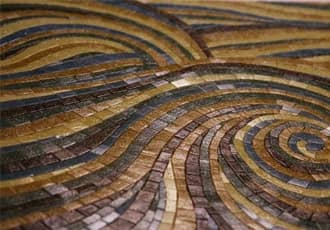
Sightlines, lighting and the panel boundary
A panel seen from the doorway may need a different centre from the wall measured between two corners. Mirror edges, a vanity unit and permanent fittings influence that composition. Side lighting can exaggerate ridges, so flattening the background matters especially on a reflective glass or metallic finish.
Borders and transitions into larger tiles
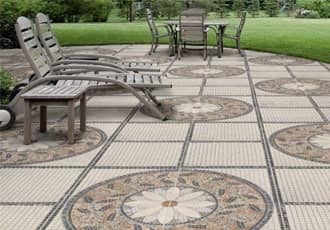
The depth of the mosaic must be coordinated with the surrounding finish. A thin glass panel beside thicker porcelain may need a prepared recess or built-out background, rather than an accidental step. Patterned floors and mosaic borders can echo a wall detail without requiring the same product on both surfaces.
A flat wall and a properly supported recess
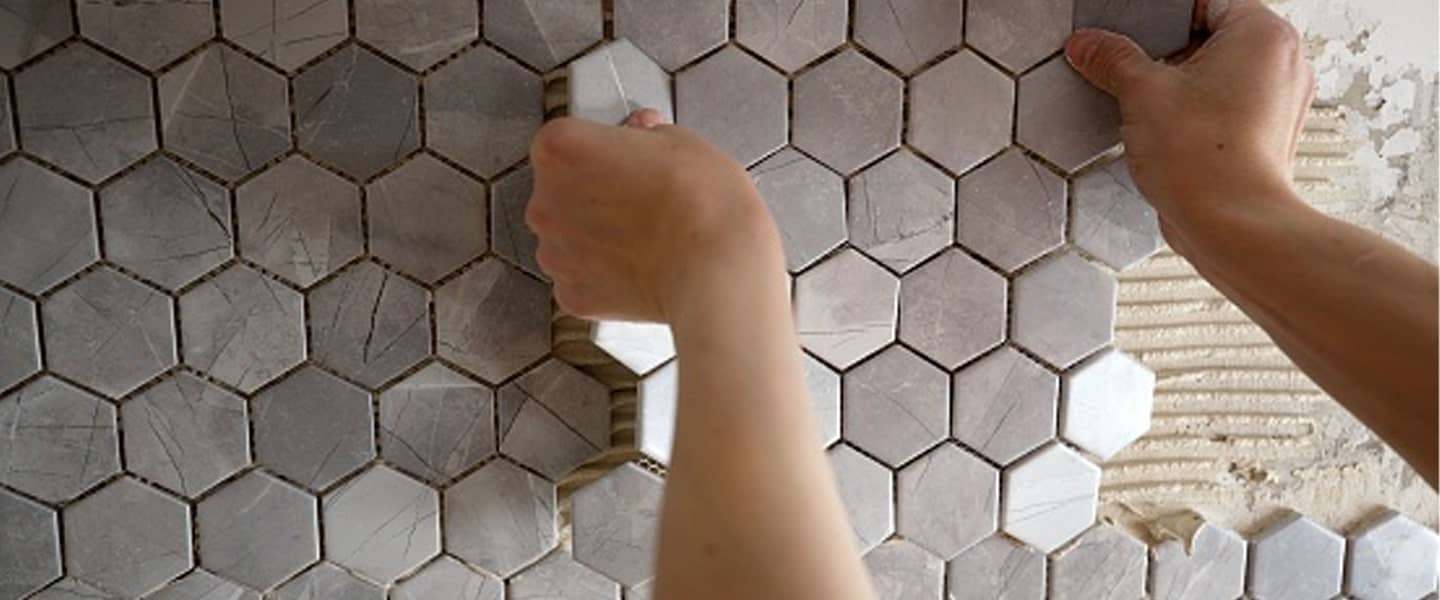
Linings, plaster and retained finishes
An uneven wall shows through a field of small pieces. Weak plaster, unstable coatings and poorly fixed boards need correction, with the weight of the complete tiling assembly checked against the background. An earlier tiled finish is only suitable to retain if its bond, condition and effect on the new edge details are acceptable.
Corners, shelves and waterproof continuity
A recess introduces more junctions than a flat wall. In wet locations, corners and penetrations need a compatible waterproof assembly behind the mosaic. The decorative finish does not replace it. Shower mosaic installation with tanking addresses those wet-area requirements alongside the surrounding enclosure.
Material choices seen at close range
Glass, mixed sheets and reflected light
Translucent glass can reveal adhesive colour and changes in the bed behind it. Iridescent or metallic components can vary with the viewing angle, and a mixed sheet may contain pieces with different cleaning or heat limitations. The whole product needs to suit the proposed location, not only its most robust component.
Stone texture and variation across the design
Natural stone can bring a softer, less uniform finish, but thickness and surface texture influence the edges and grout joints. Sheet blending helps distribute changes in tone. Some stones need protective treatment before grouting and suitable sealing afterwards, without turning a dry decorative panel into a waterproof construction.
Ceramic pieces and the scale of a motif
Ceramic and porcelain offer different shapes, glazes and edge profiles. Fine lettering or a small picture must be legible at the intended viewing distance; a design that works on a screen may need simplification to suit real pieces and joints. Bespoke fitting does not imply that every artwork can be reproduced without adjustment.
Cut edges, grout colour and finished returns
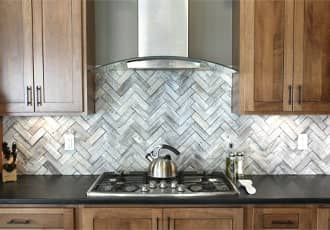
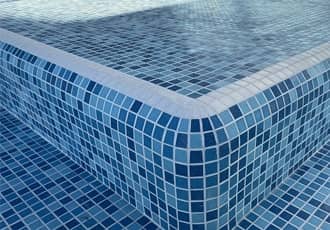
An exposed panel can finish with a suitable trim, finished tile edge or a planned return. The choice changes the visible width and how a corner feels to the touch. Around a niche, the meeting of the face and returns should read as part of the design rather than a collection of unrelated narrow cuts.
Grout can either soften the divisions between pieces or make every outline more pronounced. Compatibility with delicate faces and the joint dimensions matters alongside colour. For a worktop run, mosaic splashback fitting around kitchen fixtures also accounts for appliance clearances, socket positions and the flexible worktop junction.
A new feature or a careful alteration
Repairing a damaged mosaic panel may retain most of the existing finish, but matching the material and pattern is not always possible. Moving a shelf or removing a fitting can expose a gap that looks better as a deliberate inset than a scattering of mismatched replacement pieces.
Our mosaic wall and floor installation includes fitting-only and supply-and-fit options, with agreed background preparation and finishing. A feature in a commercial reception or hospitality interior also needs to suit its cleaning, contact and lighting conditions. Adhesive, grout and any sealant must reach the required cure before the surface is cleaned or used.
Decorative mosaic fitting enquiries
Feature walls, framed panels, niches and individual mosaic patterns with coordinated edges and surrounding finishes.
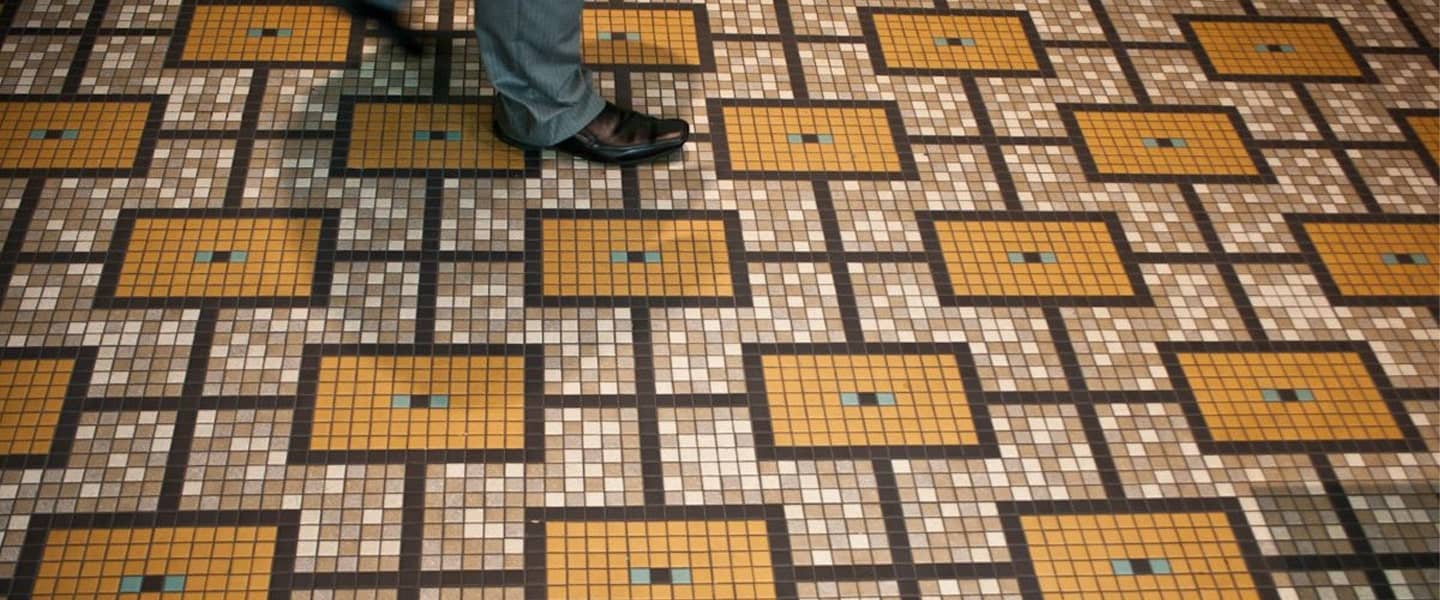
Mosaic finishes across the home and beyond
Fitting for kitchen surfaces, wet rooms, patterned floors and decorative details.
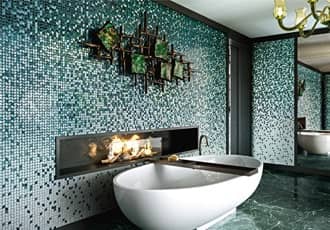
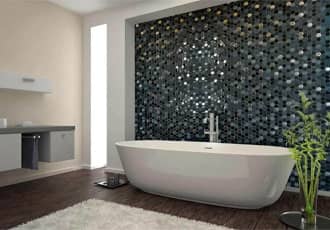
Mosaic feature walls — questions
Yes, where the background can be prepared for the different thicknesses. The build-up and edge treatment need to be planned before fitting so the panel does not finish with an unintended ledge.
Yes, using suitable material over a properly constructed and waterproofed recess. The base needs to shed water, while the back, returns and exposed face edges require a coordinated layout.
Possibly, if its construction, dimensions and waterproofing are suitable for the intended finish. Loose linings, poor drainage or insufficient depth for the new build-up may need correction first.
No. Reflections can make small changes of plane more apparent, and translucent pieces may reveal an inconsistent adhesive bed. The wall needs suitable flattening and preparation before the glass is fixed.
Bespoke pictures and logos are available where the design can be represented with suitable pieces and joint widths. Fine detail, colour availability, viewing distance and the installation location determine the achievable composition.
It can, provided the radius, tile size and fixing system are compatible. Sheet orientation and individual pieces may need adjustment to prevent the joints opening unevenly around the curve.
Not automatically. A dry living-room panel has different exposure from a shower niche. Waterproofing is determined by the location, background and intended use rather than the presence of mosaic alone.
The mosaic layout can be coordinated with agreed lighting positions, but electrical design, connections and alterations require the appropriate electrical work. Access, heat clearances and the tile build-up must remain compatible.
Often, if the surrounding finish can be retained securely and a suitable removal boundary is possible. The replacement depth, joint alignment and any waterproof layer behind the old border need careful attention.